


- Details
- Category: news
- Hits: 809

The Institute of Mediterranean and Oriental Cultures PAS
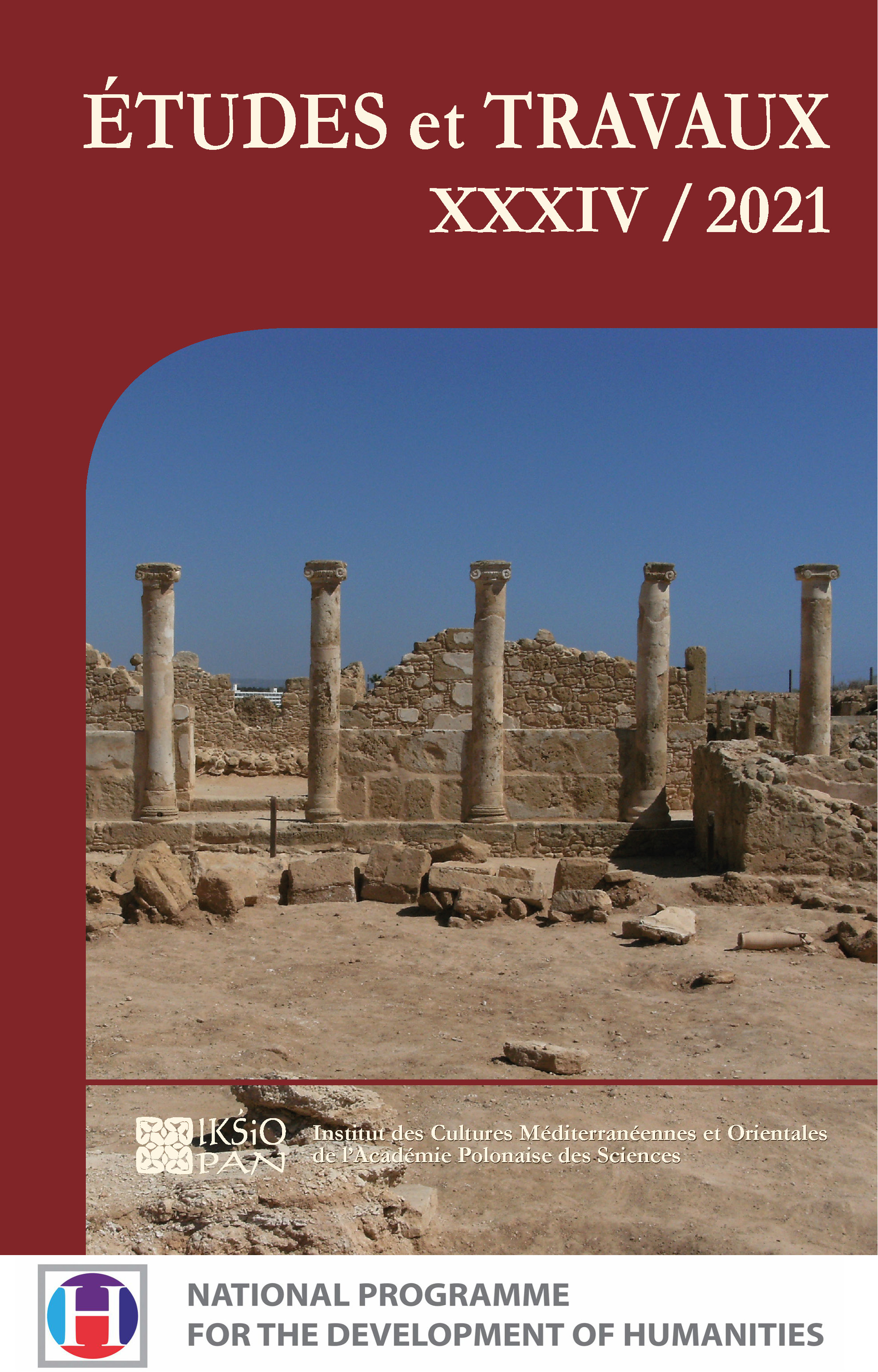
We are pleased to inform you that the electronic version of the 34th volume of our journal, Études et Travaux, is already available (without any limitations) on the journal’s website (http://www.etudesettravaux.iksiopan.pl/index.php/en/current-issue).
This volume is devoted especially to Cyprus, and the Hellenistic-Roman period.
The 34th volume of Études et Travaux has been funded through the programme of the Minister of Science and Higher Education of Poland entitled “Narodowy Program Rozwoju Humanistyki” in 2016-2021 (“The National Programme for the Development of the Humanities”; project no. 3bH 15 0099 83).
- Details
- Category: news
- Hits: 791
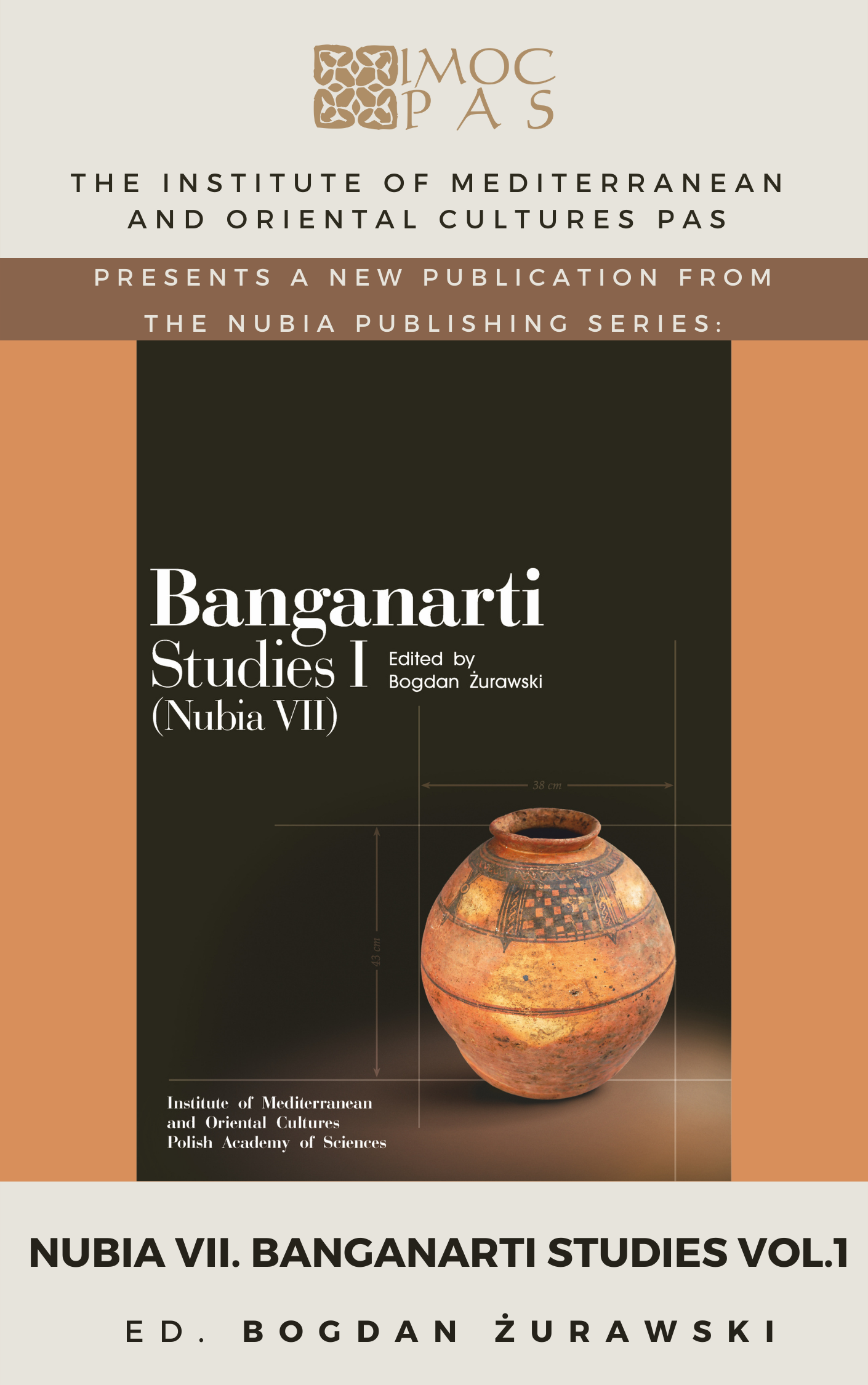
The present book was published thanks to a grant from the National Science Centre of the Republic of Poland: Archangels and Locusts: Daily Life in Banganarti, a Pilgrimage Centre on the Middle Nile, 6th through 16th Centuries (grant agreement no. 2016/21/B/HS3/03724), with a contribution by the Qatar Sudan Archaeological Project. The book is available here!
- Details
- Category: news
- Hits: 792
The Institute of Mediterranean and Oriental Cultures PAS
would like to invite you on:

The lecture will be through the Microsoft Teams platform.
- Details
- Category: news
- Hits: 902
Abstract:
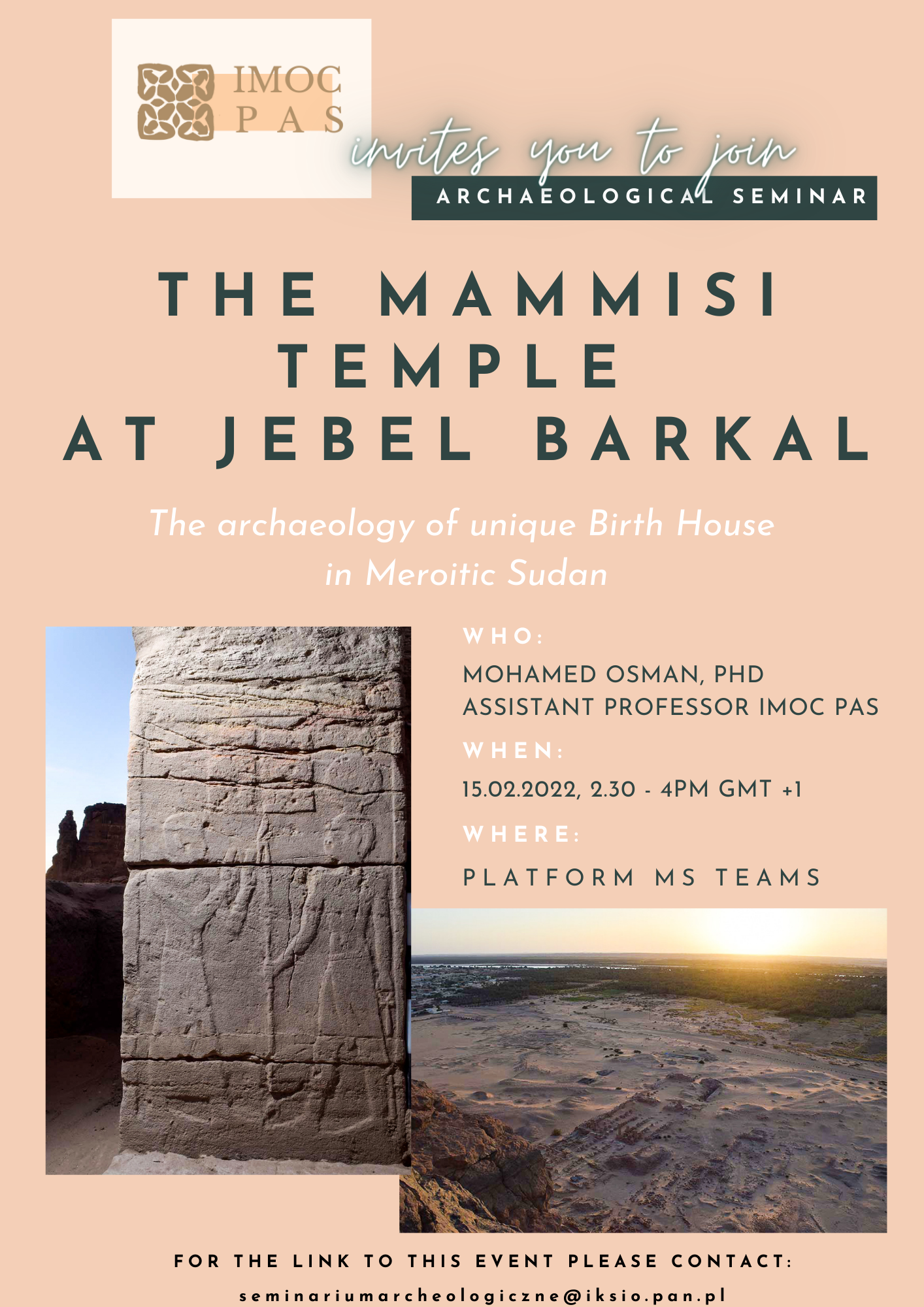
Dr Mohamed Osman is a co-director of the Sudanese Archaeological Mission at Jebel Barkal and an assistant at IMOC PAS.
During the talk, some of the recent discoveries of the Sudanese Archaeological Mission of the National Corporation for Antiquities and Museums at Jebel Barkal will be presented. Jebel Barkal is one of the most important archaeological sites in Sudan. Since the 1920s, the archaeological work done there unearthed many temple complexes, which date back to the middle of the 18th dynasty and continue through the Kushite and Meroitic periods. The site of Jebel Barkal, the southernmost residence of the god Amun, was an important cult centre for the Egyptians throughout the time of their domination over Kush. The ancient Kushites were significantly influenced by Egyptian religious beliefs and integrated them into their religion, for instance, a concept of divine kingship. In Egypt, the structures called "Birth Houses" or Mammisi were strictly associated with this concept and were either a part of the temple or were separate buildings that belonged to the temple complex. The walls of these relatively small structures were usually decorated with scenes of the divine birth of the king and the associated mythology which was deeply connected to the cult of Isis and Horus. Examples of such Mammisi scenes can be found in Deir el-Bahari, Edfu, Philea, and Dendereh.
In 2014, a Meroitic period Kiosk was discovered at the northern side of the main axis of the Amun Temple at Jebel Barkal. This sandstone structure dating back to the 2nd century AD was expected to be connected with a bigger structure. Indeed, during the 2014-2015 season, the team of the Sudanese Archaeological Mission at Jebel Barkal uncovered a significant structure in the temple area, directly behind the Kiosk. The archaeological work was concentrated at what was identified later as the Mammisi temple of Jebel Barkal.
- Details
- Category: news
- Hits: 907

Abstract:
The Sun Temples represent the unparalleled category of royal monuments in ancient Egypt, which played a pivotal role in both the religious and economic life of the Fifth Dynasty of Egypt. Despite their importance, many aspects of the temples’ history and architecture remain largely unexplored, including their role in the royal ideology of the time and their position in the construction of the sacred landscape of the Old Kingdom Memphite necropolis. Since 2010 an Italian, now Italian-Polish, Archaeological Mission from the University of Naples L’Orientale and the Institute of Mediterranean and Oriental Cultures, Polish Academy of Sciences, has been conducting new investigations at the sun temple of Niuserra at Abu Ghurab, the main sun temple discovered so far out of the six sanctuaries known from the historical sources. In his lecture, Dr Massimiliano Nuzzolo will present an overview of the main religious, architectural and ideological coordinates of these monuments, based on the results of the last ten years of the fieldwork. A particular focus will be given to the 2021 campaign. This has provided unexpected and revealing hints for the history of the site and has also opened a new phase of investigation of the temple.
This research is a part of the “Sun Temples Project. Religious spaces, ideological patterns and social dynamics of constructing the sacred landscape in Third Millennium BC Egypt” funded by the National Science Center of Poland (Narodowe Centrum Nauki) (Sonata Bis-9 Call – project no. 2019/34/E/HS3/00438).